

Fabricating and installing Fiber Cement Boards (FCB)

Fiber Cement Board is kind of building material that is widely used as a wood substitute for wall, floor, lath and plywood. However, fiber cement board installation has some certain requirements to achieve the best quality and asthetics.
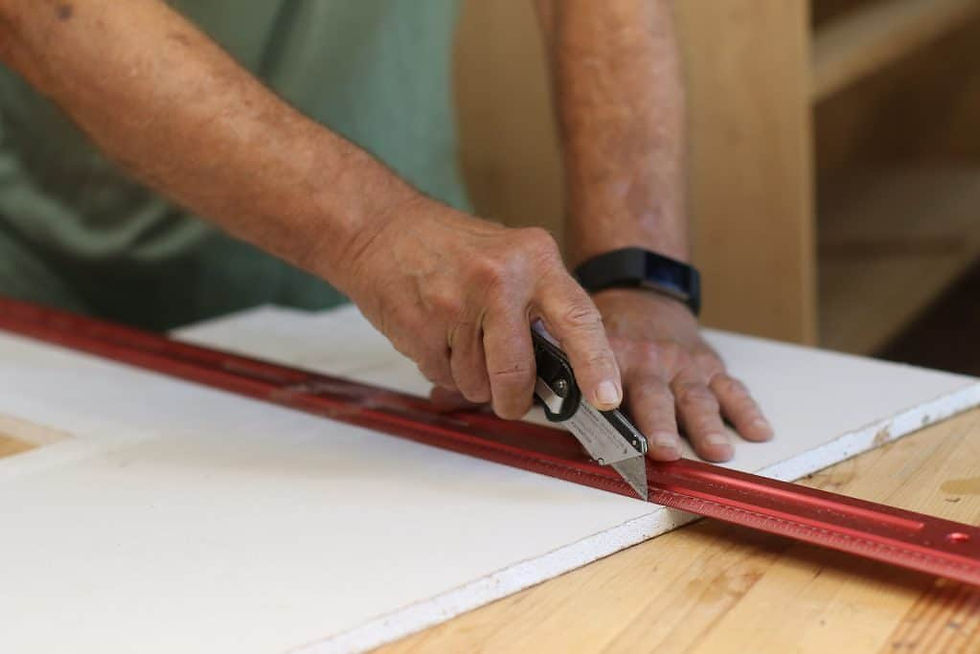
1. Score and snap FCB:
- use factory edge of FCB as a guide
- lift panel to snap FCB
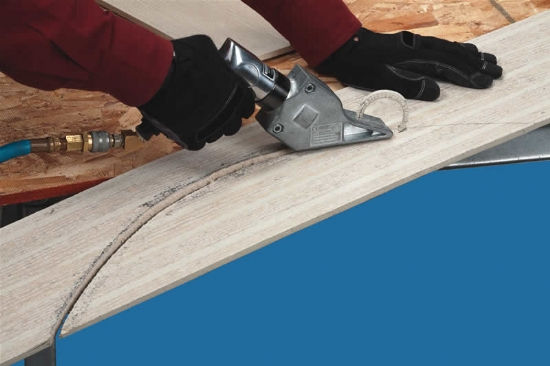
2. Power shear FCB: Support panel to prevent breaking the end
3. Blind hole cut FCB
- Drill holes at opposte corners
- Clean up edges for proper fit: use a raso or coarse file

4. Cut large holes in FCB: Use jigsaw for large holes or irregular cuts
5. Drill holes in FCB: Use bi – metal, carbide, or diamond core bit
6. Installing FCB
- All bacjer board ends must be supported. Full face is best; never less than 1-inch
- The beads of gel applied to the edges of this shower base and the edges of the fiber-cement boards are part of a surface-applied waterproof membrane system.
- Refer to board manufacturer’s fastening schedule.
- Hot-dipped galvanized roofing nails can be used but screws offer greater holding power
- Use corrosion-resistant backer board screws only!
- Gap boards with 10d nails
- Use alkali-resistant mesh tape only!

Wall installations
- Space wood or steel studs no more than 16-inches
- All board ends must be supported
- A surface-applied membrane is recommended for wet-area applications
- Use self-tapping backer board screws for steel studs
- Reinforcing tape may or may not be required by manufacturer
- Install alkali-resistant tape immediately before tiling
Floor installation
3.4 inch subflooring is recommended over 5/8 inch. 16 inch joist spacing – not 19.2 or 24
Subfloor must be flat to within 1/4 inch in 10 feet

- A support plane of thinset mortar is required. Hot-dipped galvanized roofing nails may be used. Reinforcing tape may or may not be required by manufacturer
- Install alkali-resistant tape immediately before tiling
- Use 1/4x1/4x1/4 square notch trowel to spread thinset
- Use your body weight to help seat the board
- Gap and tape as required by board manufacturer
- 1 ¼ inch fasteners were used to attach this ¼ inch backer board to a ¾ inch subfloor. Fasteners should not penetrate joists
Magazine – loaded hot-dipped galvanized roofing nails are available for stand-up nail guns.
Source: Youtube

Managing multiple online applications can become easier with sso id login. Having a common account reduces the need to remember separate usernames and passwords. I find this especially convenient for regular digital tasks because everything feels more structured and easier to manage.
wpa hash wpa hash
wpa hash wpa hash
wpa hash wpa hash
wpa hash wpa hash
wpa hash wpa hash
wpa hash wpa hash
wpa hash wpa hash
wpa hash wpa hash
wpa hash wpa hash
wpa hash wpa hash
wpa hash wpa hash
wpa hash wpa hash
wpa hash wpa hash
wpa hash wpa hash
wpa hash wpa hash
wpa hash wpa hash
wpa hash wpa hash
wpa hash wpa hash
wpa hash wpa hash
wpa hash wpa hash
wpa hash wpa hash
wpa hash wpa hash
wpa hash wpa hash
wpa hash wpa hash
wpa hash wpa hash
wpa hash wpa hash
wpa hash wpa hash
wpa hash wpa hash
wpa hash wpa hash
wpa hash wpa hash
wpa hash wpa hash
wpa hash wpa hash